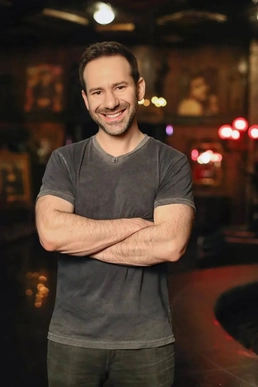
OnlyFans Owner Leonid Radvinsky's Alleged $11M AIPAC Pledge: A Deep Dive
Leonid Radvinsky, the reclusive billionaire behind the global phenomenon OnlyFans, has recently been at the center of significant media attention, not just for his transformative impact on the creator economy, but for an alleged substantial political donation. Reports suggest that Radvinsky, along with his wife, pledged an astonishing $11 million to the American Israel Public Affairs Committee (AIPAC), a powerhouse pro-Israel lobbying organization. This alleged contribution has ignited widespread discussion about the intersection of tech wealth, political influence, and philanthropic endeavors. While Radvinsky has publicly denied the claims, the intricate details revealed in investigative reports paint a complex picture, drawing public scrutiny to both the tech mogul and the lobbying group.
Unpacking the $11 Million Allegation: The Reports and Radvinsky's Denial
The initial allegations regarding Leonid Radvinsky's significant financial commitment to AIPAC surfaced through investigative journalism. According to a report by The Lever, which cited confidential internal donor documents, Radvinsky and his wife reportedly pledged $11 million to AIPAC last year. The details within these documents were reportedly meticulous, even identifying a "Mr. Anonymous Anonymous" as Radvinsky himself, alongside his wife, Katie Chudnovsky, whose name appeared linked to a wire transfer to the organization. This level of detail from internal documents adds considerable weight to the claims, highlighting the often-opaque world of political fundraising.
However, Radvinsky has squarely refuted these allegations. In a statement to The Lever, he declared, “I didn’t donate or pledge $11M,” clarifying that this denial applies to him, his foundation, and his family. He has not, however, offered an alternative explanation for the documentation that allegedly links him and his wife to the donation, nor has he commented on the reported wire transfer. This stark contrast between the internal documentation and Radvinsky's public denial leaves a void of unanswered questions, fueling further speculation and media interest in the story. It underscores the challenges in verifying private financial transactions and the often-conflicting narratives surrounding high-profile political contributions. For more context on these claims, readers can delve into
Behind the Headlines: OnlyFans Billionaire & The AIPAC $11M Report.
AIPAC's Enduring Influence and Strategy in U.S. Politics
AIPAC, founded in 1963, stands as one of the most formidable pro-Israel lobbying groups in the United States, wielding significant influence over U.S. foreign policy towards Israel. For decades, its strategy primarily focused on direct lobbying efforts, educating lawmakers, and fostering bipartisan support for Israel within Congress. However, a pivotal shift occurred in 2022 when AIPAC launched an affiliated super PAC, marking its direct entry into electoral politics. This move dramatically expanded its capacity to impact elections, allowing it to spend directly to support or oppose candidates, a power it has exercised with considerable financial might.
Since the onset of the Israel-Hamas conflict, which has resulted in extensive casualties, AIPAC has intensified its lobbying efforts. The organization has been proactive in ensuring continued, robust U.S. governmental and military support for Israel, even amidst growing international criticism from human rights organizations and legal bodies regarding Israel’s retaliatory actions in Gaza. Reports, including one from The Intercept, have highlighted the significant spending by AIPAC's political action committee in recent elections. This strategic and financial muscle demonstrates why a substantial pledge like the alleged
Leonid Radvinsky Aipac donation would be highly coveted and impactful, especially as the organization prepares for another year of significant electoral spending to maintain its influence. The ongoing debate around U.S. support for Israel, coupled with the critical role of lobbying groups, highlights the complex interplay of international relations and domestic political funding.
Leonid Radvinsky: The Man Behind the Platform
Leonid Radvinsky's journey from a Ukraine-born, Chicago-raised individual to the billionaire owner of OnlyFans is a testament to his acumen in digital ventures. Before acquiring OnlyFans, Radvinsky had already built a considerable fortune through various online endeavors. In 2009, he founded Leo, a venture capital firm with a primary focus on technology startups, showcasing his long-standing commitment to innovation and investment in the digital space.
His most notable achievement, however, remains his stewardship of OnlyFans. Under his leadership, the subscription platform evolved from a niche site into a global digital powerhouse, fundamentally altering the creator economy and providing a new model for content monetization. Despite his immense success and influence, Radvinsky has largely maintained a reclusive profile, preferring to operate outside the public spotlight. This desire for privacy has made the allegations of his significant donation to AIPAC all the more intriguing, as it offers a rare glimpse into the purported political engagements of a figure who typically shies away from public discourse.
Reports concerning Leonid Radvinsky's death have circulated, with one account stating that the OnlyFans owner passed away at 43 after a battle with cancer, a development allegedly confirmed by the company on March 23, 2026. This news, as reported by outlets like Hindustan Times citing social media discussions, often intertwined with renewed public interest in the
allegations of his $11 million AIPAC donation. Such discussions underscore the public's focus on both his business endeavors and his purported political contributions.
The Broader Implications: Transparency, Lobbying, and Public Trust
The alleged
Leonid Radvinsky Aipac pledge, coupled with the billionaire's denial, brings to the forefront critical questions about transparency in political funding and the immense power of lobbying. In a democratic society, the public's right to know who is influencing policy decisions is paramount. Large, undisclosed, or disputed donations to powerful lobbying groups can erode public trust in the political process, creating an environment where special interests might seem to hold undue sway.
*
Transparency Challenges: The very nature of "internal donor lists" and "confidential documents" highlights the often-opaque system of political donations. When such information leaks, it sparks important conversations about the extent to which private wealth influences public policy.
*
Ethical Considerations: While lobbying is a legal and protected activity, the sheer scale of financial contributions, like the alleged $11 million, raises ethical questions about fairness and equity. Do such contributions disproportionately amplify certain voices while marginalizing others?
*
Impact on Policy: The unwavering efforts of groups like AIPAC to shape U.S. policy, especially regarding sensitive international conflicts, demonstrate how effectively financial resources can be leveraged to achieve specific political outcomes. This makes the source and size of these funds highly relevant to public discourse.
For citizens, understanding the financial architecture behind political influence is crucial. While it's important to recognize that donations do not automatically translate into direct policy changes, they undoubtedly open doors, create access, and fund campaigns that can shift the political landscape. The ongoing public and media scrutiny of Radvinsky's alleged pledge serves as a reminder of the critical need for greater transparency and accountability in political financing to maintain faith in democratic institutions.
Conclusion
The alleged $11 million pledge by OnlyFans owner Leonid Radvinsky to AIPAC has illuminated the often-hidden dynamics of wealth, power, and political influence. While Radvinsky vehemently denies the claims, the detailed reports, including alleged internal documents, have sparked extensive debate. This incident underscores the significant role of powerful lobbying organizations like AIPAC in shaping U.S. foreign policy and electoral outcomes, particularly during times of international tension. As the public continues to scrutinize the interplay between individual wealth and political contributions, the controversy surrounding Radvinsky's alleged donation serves as a powerful case study in the ongoing conversation about transparency and accountability in the realm of political financing.